
How is UFE Performed?
UFE Procedure
Preparation
Before the treatment, patients undergo imaging tests, such as MRIs, to evaluate the size and position of the fibroids.
Catheter insertion
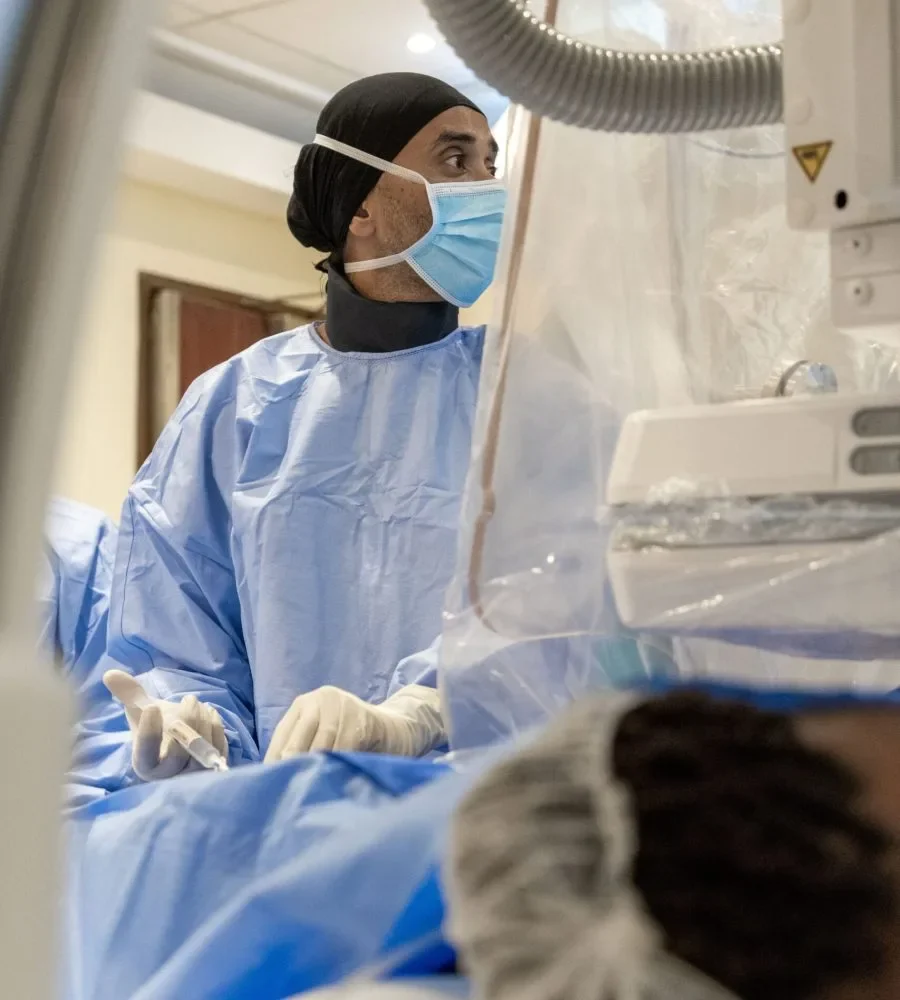
A thin tube called a catheter is inserted in a blood vessel in the upper thigh, groin or left wrist, which is then advanced to the blood vessels supplying the fibroids using x-ray guidance.
Embolization
Microscopic particles are injected through the catheter to block the arteries supplying blood to the fibroids. The procedure is completed in under 90 minutes with minimal discomfort.
Post-Procedure
Patients may experience cramping or mild pain afterward, which is usually managed with medication.
Recovery After UFE
Immediately following the procedure, you will be taken to your room where you will be taken care of by nurses who will monitor your vitals. The embolization procedure itself is painless; however, you will be given pain killers for pain that may develop soon after.
A 1-night hospital stay is usual, with discharge the following morning. You can return to normal activities almost immediately, but it is advisable to book 1-2 weeks off work. Some patients may continue to experience occasional cramping pain for a few weeks.
Heavy periods usually reduce within 2-3 months on average. Fibroids shrink approximately 40 to 60% in size by 6 months, and they may continue to shrink for a year or more.
Most women are able to get back to normal activities – including work, home life, socialising, and exercise almost immediately after the procedure.
Considering Uterine Fibroid Embolization in Kenya?
Dr Ravjit Sagoo is an interventional radiologist specialising in Uterine Fibroid Embolization, a procedure which has revolutionised fibroids removal for sufferers, at Aga Khan University Hospital, MP Shah Hospital and Avenue Hospital in Nairobi. Clinics are only at Aga Khan and MP Shah Hospitals. Schedule a consultation to discuss fibroid treatment options.