
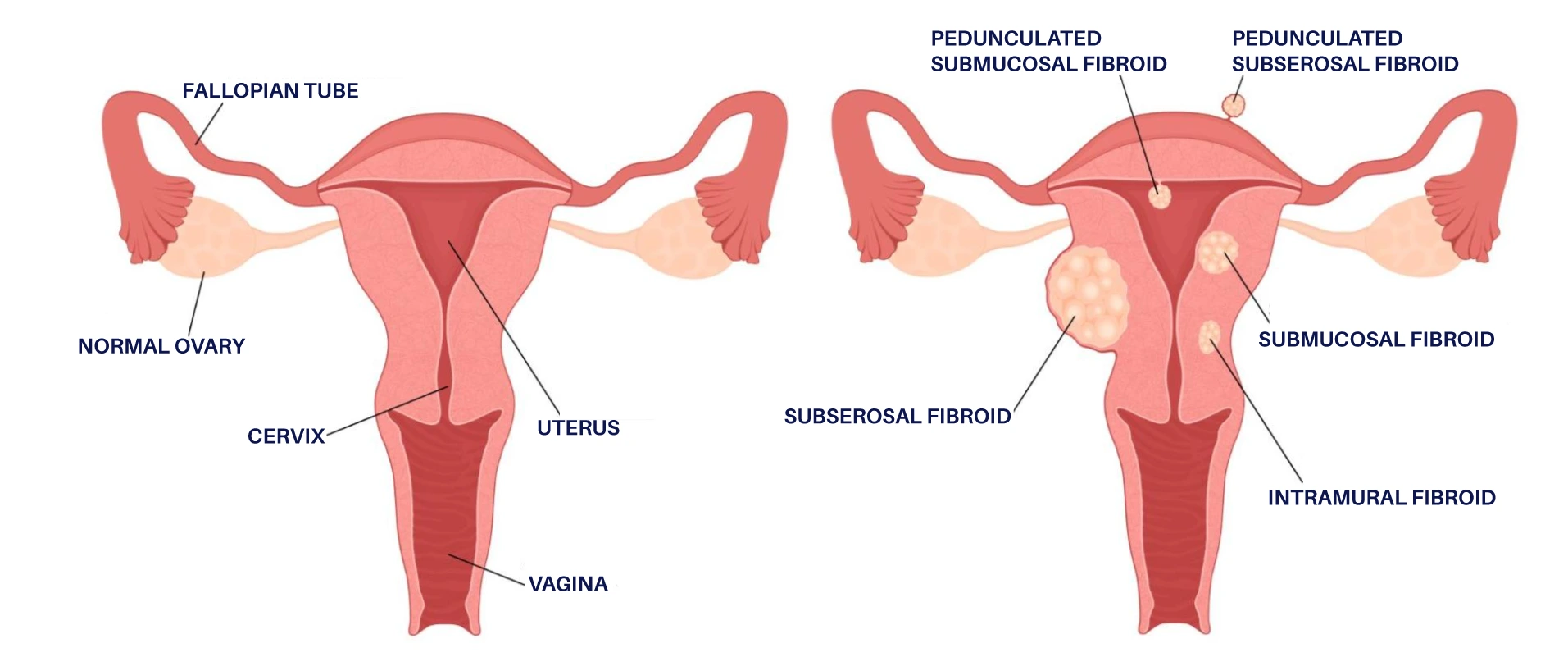

Subserosal Fibroids
Subserosal fibroids form on the outer surface of the uterus and can press on nearby organs, sometimes causing pelvic discomfort or frequent urination.They typically do not affect menstrual flow as much as other types. Common signs are: pelvic pressure, abdominal bloating, constipation or frequent urination if they press on the bladder.
Submucosal Fibroids
Submucosal fibroids develop just beneath the inner lining of the uterus and may bulge into the uterine cavity. Even small submucosal fibroids can cause significant symptoms because they affect the uterine lining. Common signs are: heavy menstrual bleeding, anemia and sometimes fertility issues or recurrent miscarriage.

Intramural Fibroids
Intramural fibroids grow within the muscular wall of the uterus and are the most common type. As they enlarge, they can make the uterus feel bigger or heavier. Common signs are: heavy or prolonged periods, pelvic pain, lower back discomfort and pressure symptoms.
Pedunculated Fibroids
Pedunculated fibroids grow on a thin stalk (peduncle) either inside or outside the uterus. Because they are attached by a stalk, they can sometimes twist, causing sudden pain. Common signs are: localized pelvic pain or pressure depending on their size and position.